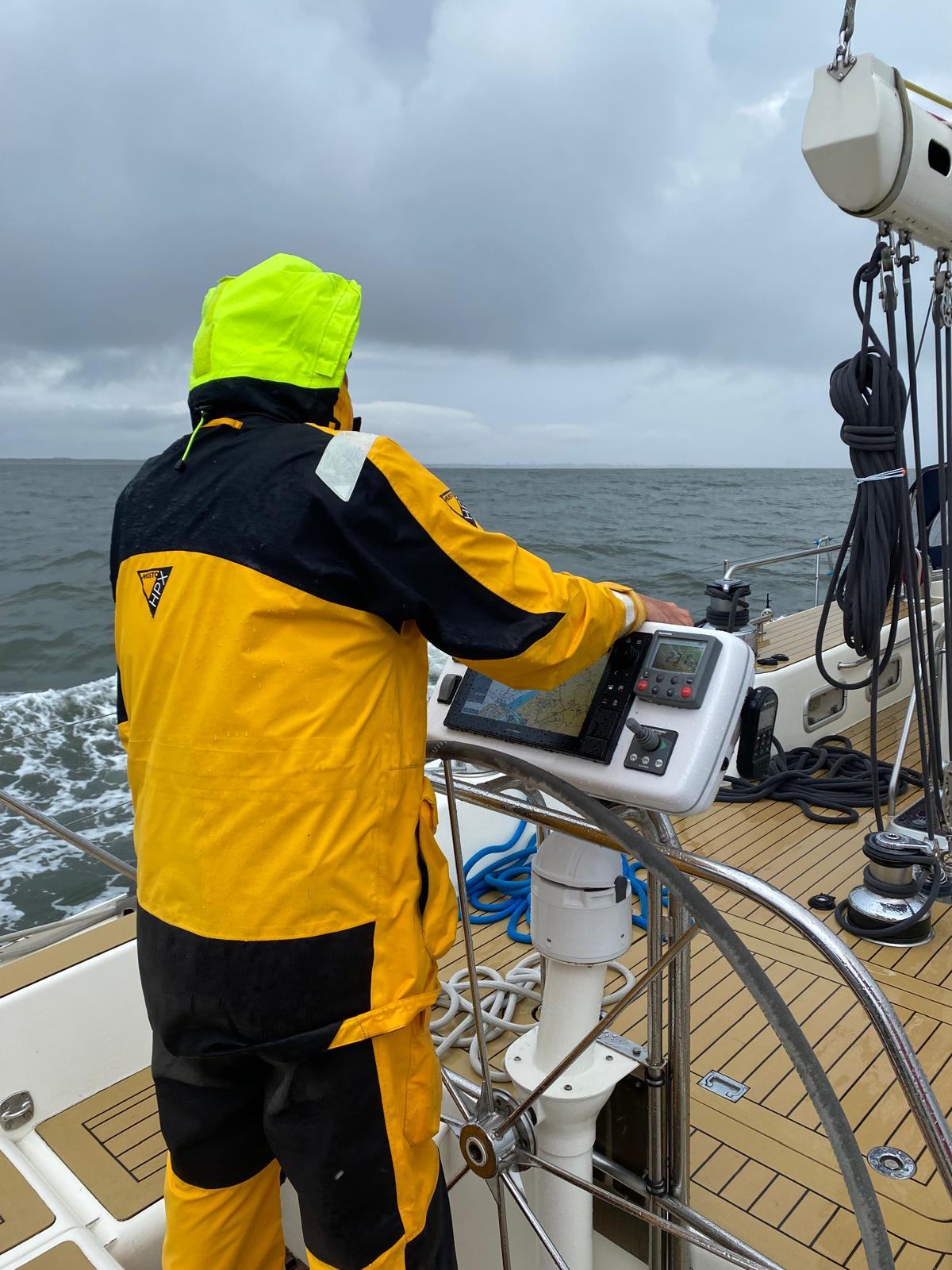
In any serious offshore expedition, safety comes first. This is not an abstract concept — it begins with the choice of vessel and ends with the training of every crew member.
The ship as foundation
The Mariflex Challenge was designed with safety as its starting point. The steel hull offers solid protection. The Challenge series the ship belongs to was built for round-the-world races and, as a class, has sailed in the toughest seas — from the Southern Ocean to Atlantic storms.
Safety equipment
The equipment is being assembled to go well beyond the minimum offshore requirements. The preparation plan includes:
The exact equipment will be finalised and certified during preparation.
Training and preparation
Every crew member goes through a preparation programme:
Crew and experience
The core team has extensive offshore experience. But there is also room for less experienced crew members — provided you are willing to learn and prepare seriously.
The combination of a robust vessel, thorough equipment and well-trained crew forms the basis for a safe expedition.